Synopsis
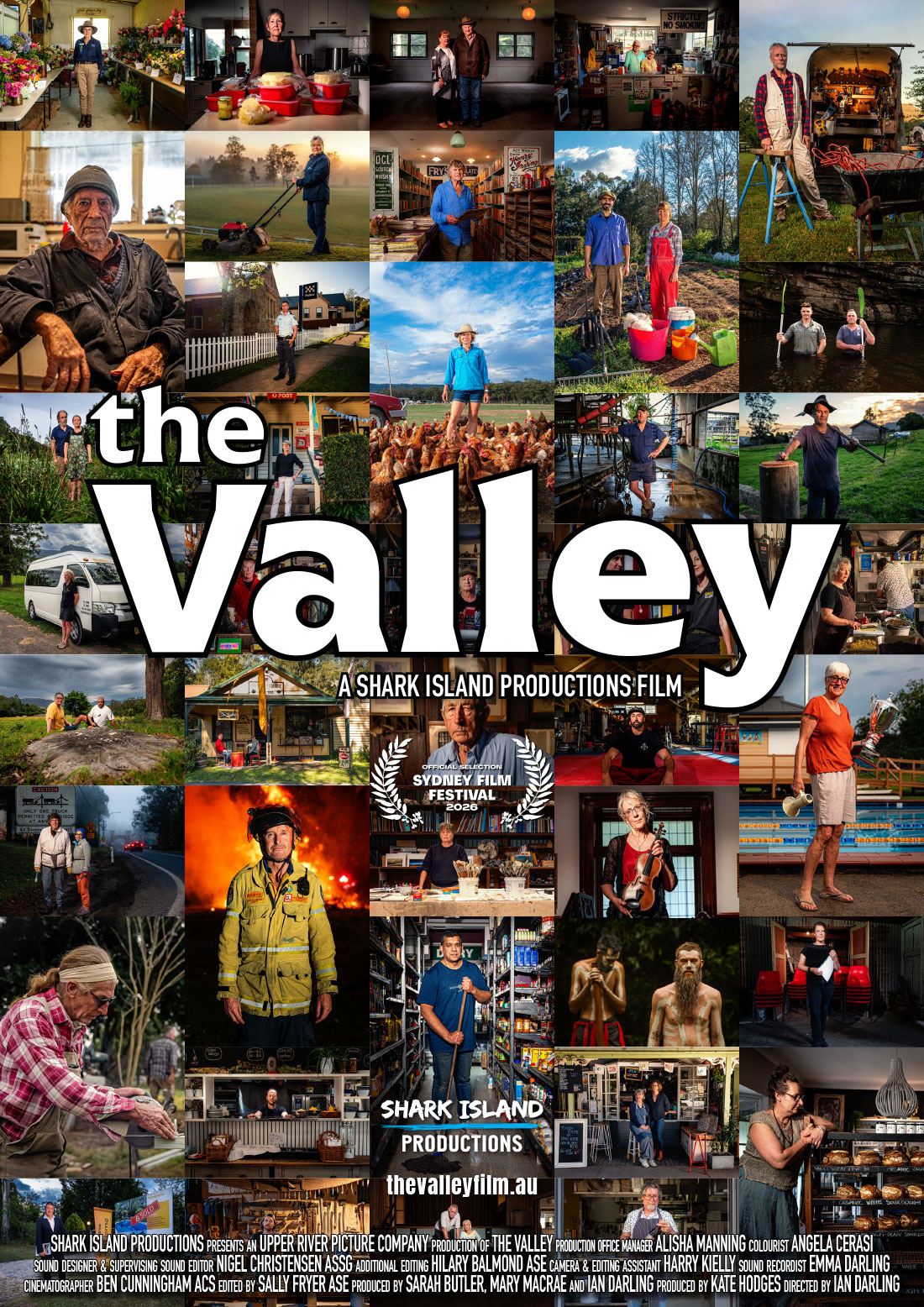
In a small country town, nestled deep in a remote valley, residents toil endlessly and silently, often seven days a week. Many work in solitude. Each is defined by their craft. Yet these isolated lives are interconnected as locals quietly yearn for human contact and a real sense of community.
THE VALLEY draws on the stillness and solitude of an Edward Hopper painting, the patient immersion of a Frederick Wiseman film, the documentary realism and everyday truth of Studs Terkel’s Working, the environmental framing of an Arnold Newman portrait, Diane Arbus’ intimate glimpses of ordinary life, Annie Leibovitz’s bold colour and narrative rich images, and Raymond Carver’s economical storytelling that renders life as it is.
Director’s Statement
I set out to create a film that explored the deeper themes of solitude and silence — not as abstract concepts, but as tangible, lived experiences. The COVID years heightened my awareness of how powerful silence can be. This inspired me to explore stillness and solitude, especially as they appear in rural life — a slower, more deliberate rhythm. Placing the film in a farming community felt like the best way to authentically capture this story.
Kangaroo Valley, just three hours from Sydney, became our chosen setting. Nestled within a secluded valley surrounded by dramatic cliffs and home to flowing rivers, it embodies physical isolation yet interconnectedness. Residents work long days in solitude, milking cows, growing vegetables, and baking bread. I wanted to immerse audiences into “valley time,” a space where patience and tranquillity coexist with toil and effort. The film offers viewers a chance to experience not only the hard work of valley inhabitants but the serenity and space inherent in this landscape.
THE VALLEY has been inspired by the works of various artists, photographers, filmmakers and writers. It draws from the solitude and isolation of an Edward Hopper painting, the patience and duration of a Frederick Wiseman film, the realism and everyday truth of Studs Terkel’s writings — especially Working, the environmental framing of an Arnold Newman photographic portrait, Annie Leibovitz’s bold colour and narrative rich images, and Raymond Carver’s economical storytelling that captures life as it is. These are all essential elements for understanding daily life in this rural community.
I have long been fascinated by the beauty and truth of ordinary everyday life. I’m intrigued by how something quite extraordinary can emerge from the seemingly mundane. I’m drawn to stories of people who work quietly and diligently, often unnoticed, but with great dignity and perseverance. My goal was to create a documentary that reflects this quiet strength — an exploration of life’s subtle rhythms and the resilience of those who live by them.
Although the lives of those we followed were typically marked by days of relative silence and solitude, they were not necessarily lonely. Many have found peace, contentment, and great joy in their routines. Loneliness is a universal experience, and this film reflects the myriad ways people navigate it — embracing solitude, yearning for connection, and seeking community in different forms.
This project challenges traditional documentary storytelling. I aimed to create an immersive, meditative experience that invites patience and openness from viewers. With its mostly silent narrative, the film emphasises the unspoken — highlighting the power of stillness and the sounds of silence. It invites viewers to interpret and create their own stories for each character, filling in the quiet moments, and embracing the ambiguity. Its length and rhythm requires a conscious commitment, but I believe this approach offers a meaningful journey — one that suspends the noise of modern life and offers a space for empathy and reflection.
Ultimately, THE VALLEY is a contemplative journey — a chance for viewers to slow down, breathe, listen and observe. It celebrates the power of solitude and the importance of community. In these challenging times, it offers a quiet affirmation of inner peace, resilience, and the profound beauty of stillness.
— Ian Darling, October 2025